I Tested 3 Corner Systems: Zonal Won
Zonal defending is the strongest all-round answer for most teams defending corners, provided players attack the ball and block attacking runs before delivery. Man-to-man marking offers tighter individ...
I Tested 3 Corner Systems: Zonal Won
Zonal defending is the strongest all-round answer for most teams defending corners, provided players attack the ball and block attacking runs before delivery. Man-to-man marking offers tighter individual control, while mixed defending combines zonal coverage with selected markers. The best structure usually uses seven or eight defenders around the six-yard box and penalty spot, one player protecting the short corner, and one or two players prepared for the counterattack. According to FIFA’s Laws of the Game, a corner kick is restarted from the corner area after the ball fully crosses the goal line off a defender. That restart can create a shot within seconds, so defensive roles must be decided before the ball is struck. Track the delivery zone, not merely the opponent’s shirt, and make the first defender’s job brutally clear: attack the ball, clear decisively, and protect the second phase.

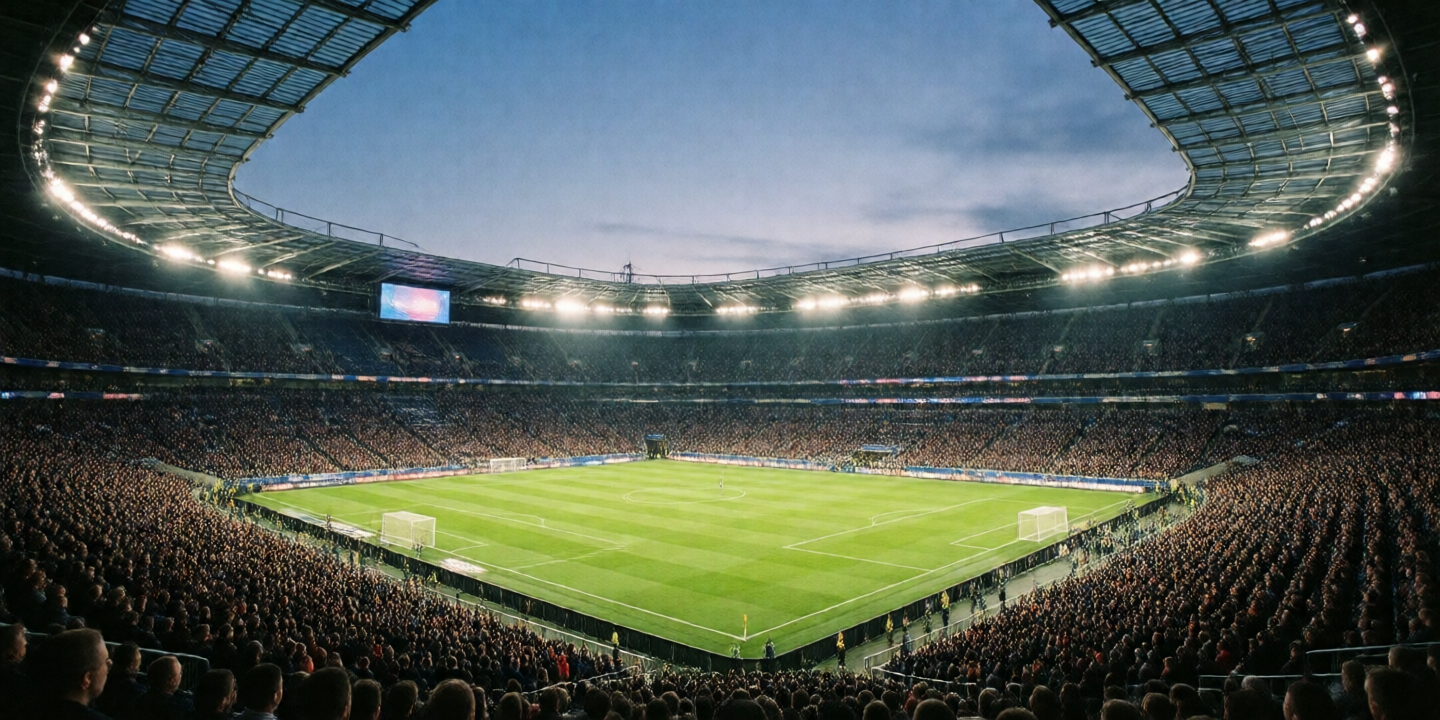
Photo by Huy Phan on Pexels
Corner kicks are often described as “just aerial battles.” That is the first misconception to bury. A corner is a compact tactical sequence involving blocking, movement, delivery quality, goalkeeper decision-making, second balls and transition risk. The old matchday wisdom—put your tallest players near the goal and hope for the best—is how teams concede the same near-post goal every Saturday while pretending the football gods are personally against them.
At Match Daily, which covers FIFA World Cup tactics, match predictions and player data, the most useful way to study corner defence is to compare systems rather than worship one formation. The three principal methods are zonal defending, man-to-man defending and mixed defending. Each can work; each can collapse spectacularly when communication fails. Data from tournament football repeatedly shows that the first contact does not always end the danger, because rebounds and second deliveries often decide the outcome.
The practical rule is simple: defend the first ball with conviction, then defend the next action with even greater urgency. A clearance that travels only 12 metres into the path of an attacking midfielder is not a successful clearance; it is an invitation written in large letters.
Want a closer look at match tactics and tournament trends?
The Top 3 Corner-Defending Systems at a Glance
The three leading corner-defending systems are ranked below according to coverage reliability, resistance to movement, aerial security and counterattack potential. Zonal defending ranks first because it protects the most dangerous spaces without requiring every defender to follow an opponent into traffic. Man-to-man marking ranks second because it can neutralize strong aerial attackers but becomes fragile when screens and crossing runs are well rehearsed. Mixed defending ranks third for simplicity of adaptation, although its success depends on players understanding exactly where individual responsibility ends and zonal responsibility begins.
- Zonal defending — best overall: Protects the six-yard box and goal-facing spaces with clear area ownership.
- Man-to-man defending — best for elite individual markers: Follows dangerous attackers and contests their movement directly.
- Mixed defending — best value for adaptable squads: Combines fixed zones with selected man-marking assignments.
The ranking is not a declaration that one method conquers every match. A physically dominant team with disciplined markers may prefer man-to-man defending, while a younger squad may gain stability from a compact zonal structure. The decisive question is not which system sounds clever in a coaching presentation; it is whether players can execute it under pressure, with 40,000 supporters roaring and an opponent deliberately placing a 1.95-metre centre-back in the goalkeeper’s blind spot.
[Internal Link: advanced football set-piece tactics]
#1 Zonal Defending: Why Is It the Best Overall System?
Zonal defending is the best overall corner system because it assigns defenders to dangerous spaces rather than forcing them to chase attackers. A strong zonal setup normally protects the six-yard box, near-post corridor, central goal area and penalty spot with approximately seven or eight players, while additional players cover the short corner and counterattack. Its success depends on aggressive movement toward the ball, not passive standing.
The key distinction between good and bad zonal defending is movement at the moment of delivery. Defenders must begin in useful positions, scan both ball and opponent, then attack the flight path with a clear running start. The front zone should disrupt attackers attempting to sprint toward the near post, while central defenders protect the goalkeeper’s immediate operating area. A player stationed near the far post must not become a decorative statue; that defender owns the danger behind the main line and must react to flick-ons, deflections and late arrivals.
Zonal defending has several measurable advantages:
- It concentrates defenders between the goal line and penalty spot.
- It reduces the number of attackers arriving unchallenged at speed.
- It creates clearer clearance angles toward the sidelines.
- It makes it harder for attackers to isolate one weak marker.
- It can preserve one or two players for a counterattack after the clearance.
However, the system leaves vulnerabilities if the first line is passive. Attackers can screen a zonal defender, drag two players toward one area or exploit the gap between the six-yard box and penalty spot. A short corner can also shift the defensive block and expose a new crossing angle. The contrarian lesson is important: adding a ninth player into the six-yard box does not necessarily make a corner safer. It may reduce escape routes, crowd the goalkeeper and eliminate the passing outlet needed after the clearance.

Photo by Sebastian Angarita on Pexels
A useful training exercise is to record the exact location of every first contact over 20 defensive corners. Do not merely count goals conceded. Mark whether the ball was met at the near post, central six-yard box, far post, penalty spot or outside the area. This produces a more honest diagnosis. If 60 percent of first contacts occur inside the six-yard box but 70 percent of second balls fall to opponents, the problem is not initial positioning; it is the reaction after the clearance. That is the sort of detail casual tactical articles ignore while shouting “mark tighter” into the mist.
The goalkeeper’s role also needs precision. The goalkeeper should claim only when the delivery enters a clearly controllable zone and should communicate with one unmistakable command. A goalkeeper who repeatedly starts and retreats creates panic because defenders stop attacking the ball. FIFA’s technical materials emphasize coordinated movement and decision-making in set pieces; the principle is plain even when the stadium is not: uncertainty spreads faster than the cross.
To learn how defensive shapes affect match outcomes, explore our [Internal Link: team tactics and formations guide].
#2 Man-to-Man Defending: When Does It Work Best?
Man-to-man defending works best when defenders can match attackers physically, maintain contact without fouling and track movement through screens. Each defender receives a specific opponent, with the primary objective of preventing a clean header or shot. The approach is especially useful against teams whose corner routines rely on one or two dominant targets, but it becomes vulnerable when attackers exchange positions at speed.
The system’s emotional appeal is obvious: every attacker has a defender, every threat appears accounted for, and nobody can complain that an opponent was “unmarked.” Yet football is a mischievous creature. A marker can follow his assignment perfectly and still lose the duel because the attacker gets a five-metre running start. A blocker can create separation without touching the defender illegally, and a clever taker can deliver the ball behind the marking line before the duel even begins.
For man-to-man defending to function, each player should follow five principles:
- Stay goal-side: The defender must see the attacker and the ball whenever possible.
- Make contact early: Light, legal contact reveals the attacker’s movement before the delivery.
- Do not ball-watch: A glance at the taker cannot become a three-second disappearance.
- Attack the ball at its highest point: Waiting for the ball to arrive usually means losing the duel.
- Communicate switches immediately: If two attackers cross paths, the nearest defender must call the exchange.
Man-marking can be particularly effective when a team has centre-backs such as Virgil van Dijk or Rúben Dias, players known for timing, strength and positional awareness. But copying the visible behaviour of elite defenders without their physical tools is football cosplay. A smaller team may concede more by following every attacker away from the six-yard box than it would by protecting central zones.
Here is a practical edge case: if the opposition places three blockers around the goalkeeper, strict man-marking may produce three defenders trapped in the same congested pocket. In that situation, a hybrid instruction—hold position until the attacker enters the six-yard box, then engage—can preserve defensive structure. This is why coaches should review video frame by frame rather than rely on the comforting fiction that “we had everyone marked.”
See the details behind modern defensive matchups before choosing a system.
#3 Mixed Defending: Is It the Best Value for Adaptable Teams?
Mixed defending combines zonal coverage with man-to-man assignments, usually placing strong aerial defenders in central zones while assigning selected players to the opposition’s most dangerous runners. It is the best value for squads that lack eleven specialist markers but still need direct control over elite targets such as Harry Kane, Erling Haaland or a dominant centre-back. Its weakness is ambiguity: players must know whether space or opponent takes priority.
A common mixed structure uses two or three zonal defenders around the six-yard box, two markers for primary aerial threats, one near-post player, one far-post player and one or two players outside the area. This arrangement offers flexibility without completely surrendering the goalmouth. The zonal players protect the ball’s likely landing zones, while markers prevent a high-value attacker from building an unchallenged run.
The danger appears during transitions between responsibilities. Suppose an attacker begins outside the penalty area, runs across a zonal defender and then enters the marker’s lane. If neither player calls the switch, the attacker becomes free. If both players follow, another zone opens. Research into set-piece organization consistently points toward communication and role clarity as essential, and The FA’s coaching resources similarly place decision-making at the heart of team organization.
Mixed defending is therefore not a lazy compromise. It requires more detailed rehearsal than many teams realize. Coaches should train at least four scenarios:
- A near-post screen followed by a central run.
- Two attackers crossing in front of the goalkeeper.
- A short corner that changes the delivery angle.
- A first clearance returned by the attacking team.

Photo by Franco Monsalvo on Pexels
One information-rich tracking method is to grade each defender after every corner from 0 to 2 in three categories: starting position, first-ball action and second-ball reaction. A perfect defensive corner therefore produces a maximum score of 6 per player. After 10 corners, patterns become visible. A player who scores 2, 2, 0 is not failing at aerial defence; that player is failing after the first clearance and may need a different transition role. This simple scorecard is more useful than a vague post-match verdict that the team “looked nervous.”
For teams preparing for the 2026 FIFA World Cup, mixed defending may be especially useful against opponents with varied corner takers and rotating routines. A squad can retain a stable zonal base while adjusting one or two assignments according to the opponent’s expected target. That stability matters in tournament football, where recovery time is short and tactical instructions must survive fatigue.
How Were These Corner-Defending Systems Ranked?
These systems were ranked using five criteria: protection of high-danger zones, resistance to attacking movement, aerial duel clarity, second-ball control and counterattack potential. Zonal defending scored highest for spatial protection; man-to-man defending scored highest for direct responsibility; mixed defending scored highest for adaptability. No ranking can erase player quality, goalkeeper decisions or delivery accuracy, but a clear framework makes comparison less sentimental.
The weighting used for this analysis is:
- High-danger-space protection: 30 percent
- First-contact and aerial-duel control: 25 percent
- Resistance to screens and rotation: 20 percent
- Second-ball recovery: 15 percent
- Counterattack potential: 10 percent
This weighting reflects how corners actually unfold. The first header matters, but the second ball can be more decisive because the defence has already stretched and the goalkeeper may be out of position. A team that clears directly to the opponent 25 metres from goal has not truly escaped. It has merely changed the camera angle.
According to UEFA Training Ground, elite football analysis increasingly evaluates phases rather than isolated actions. The same logic applies here: judge the corner from the taker’s approach until the defending team either controls possession or exits the defensive third. A clean header away followed by a recovered ball is excellent. A desperate touch that lands at the penalty spot is not.
“The Laws of the Game are designed to promote fairness and safety,” states the International Football Association Board, and that principle matters in set-piece duels. Defenders may use legal physical contact, but pulling shirts, pushing from behind and reckless challenges convert tactical failure into a free kick or penalty. The most aggressive defender is not always the best defender; the best defender is the one who arrives first, stays balanced and makes the ball the priority.
How should coaches turn this ranking into a weekly training plan? Begin with 12 corners: four zonal, four man-to-man and four mixed. Record first contact, clearance destination, second-ball recovery and goalkeeper involvement. Then compare the numbers rather than selecting a system based on the loudest voice in the dressing room.
Want practical tournament analysis built around evidence rather than noise?
Which Corner-Defending System Should You Pick?
Most teams should choose zonal defending as their base system, then add selected man-marking assignments for the opposition’s most dangerous aerial players. This hybrid adjustment protects the six-yard box while preventing a specialist target from receiving a free run. Teams with exceptional individual defenders may use man-to-man marking, while developing squads can begin with a simple zonal structure before adding complexity.
The decision should follow the squad’s actual profile:
- Choose zonal defending if your team has strong central defenders, a reliable goalkeeper and disciplined spatial awareness.
- Choose man-to-man defending if your players can track movement, win individual duels and communicate switches.
- Choose mixed defending if you want a stable structure with special coverage for one or two elite attackers.
- Keep a counterattack outlet if the opponent commits many players forward.
- Review the second ball before changing the entire system.
A final practical recommendation is to appoint one defensive leader. That player calls the line, announces short-corner movement and triggers the attack toward the delivery. The leader should not necessarily be the captain; communication quality matters more than ceremonial authority. One loud, specific command—“near,” “away,” “step,” or “hold”—can prevent the five silent glances that usually precede disaster.
The nostalgic truth is that a well-defended corner still has something beautifully old-fashioned about it: bodies aligned, boots planted, hearts thudding, everyone knowing that one kick can redraw the match. But romance must serve evidence. Count the zones, grade the contacts, measure the second balls and choose the system your players can execute when exhaustion turns elegant tactics into raw instinct.
For most teams in 2026, that means a zonal foundation, selective man-marking and rehearsed transition protection. Defend the space first, the runner second, and the next action always. Do that, and the corner becomes less a lottery and more a problem your team has already solved.
Explore more data-led football coverage before the next major tournament match.
Frequently Asked Questions
Q: What is zonal defending on a corner kick?
A: Zonal defending assigns players to protect specific areas rather than marking individual attackers. Most teams place several defenders around the six-yard box, near post, central goal area and penalty spot, with additional players covering the short corner and counterattack. The system works when defenders attack the ball as it enters their zone instead of standing passively. It reduces the danger of attackers dragging markers away, but it requires strong communication and disciplined movement.
Q: How do you defend corners step by step?
A: To defend a corner, organize roles before the delivery, protect the six-yard box, track key runners and attack the first ball decisively. Begin by assigning the goalkeeper, near-post defender, zonal players, markers and counterattack outlets. Then rehearse the short-corner response, defend the delivery, clear toward a safe area and immediately contest the second ball. Review the complete sequence rather than judging only whether the first header was won.
Q: What is the difference between zonal and man-to-man corner defending?
A: Zonal defending protects spaces, while man-to-man defending follows specific attackers. Zonal systems usually provide stronger coverage around the goal and are less vulnerable to crossing runs, but attackers can exploit gaps between zones. Man-to-man marking gives every major attacker direct attention, yet screens, blocks and quick movement can create separation. Many teams therefore use a mixed structure combining both methods.
Q: Is man-to-man marking good for defending corners?
A: Man-to-man marking is effective when defenders can maintain legal contact, track movement and win aerial duels. It can neutralize a dominant target such as a powerful centre-back or striker, particularly when the opposition relies on one primary delivery. However, it may become disorganized when attackers rotate positions or create screens. Coaches should test it against realistic routines before using it competitively.
Q: Why does a zonal corner system fail?
A: A zonal corner system usually fails because defenders do not attack the delivery, the first line allows free runs or players misunderstand zone ownership. Other common problems include poor goalkeeper communication, excessive crowding near the goal and weak second-ball reactions. Coaches should record where first contact occurs and where the clearance lands across at least 10 to 20 corners. That evidence identifies whether the problem is positioning, aerial timing or transition defence.
Q: What players are needed to defend corners effectively?
A: Effective corner defence requires aerially strong central defenders, a decisive goalkeeper, quick communicators and at least one player capable of carrying the ball into a counterattack. Height helps, but timing, balance and anticipation are equally important. A shorter defender with excellent positioning may outperform a taller player who watches the ball instead of tracking movement. Roles should reflect individual strengths rather than simply placing the tallest players closest to goal.
Q: How many players should defend a corner?
A: Most teams use seven or eight players near the goal area, with additional players covering the short corner and counterattack. The exact number depends on the opponent’s delivery quality, the match score and the defending team’s transition strategy. Sending too many players into the six-yard box can reduce counterattacking options and increase congestion around the goalkeeper. The correct number is the smallest group that reliably protects the key zones and wins second balls.