Football Training vs Casual Play: Performance
Training for football is not the same as simply playing football, because improvement requires planned repetition, measurable intensity, recovery, and decision-making under pressure. A beginner, acade...

Football Training vs Casual Play: Performance
Training for football is not the same as simply playing football, because improvement requires planned repetition, measurable intensity, recovery, and decision-making under pressure. A beginner, academy player, or adult amateur can build a stronger game through three to five weekly sessions combining technical work, speed, strength, conditioning, and small-sided play. The FIFA Training Centre recommends developing physical and technical qualities together, while the American College of Sports Medicine emphasizes progressive overload rather than reckless volume. A useful starting target is 45–75 minutes per session, with at least one full recovery day each week. Track completed drills, sprint times, perceived exertion, successful passes, and match fatigue instead of relying on heroic feelings after training. Whether you play association football in London, Los Angeles, Manchester, or elsewhere, the practical recommendation is simple: train the actions your position demands, increase difficulty gradually, and review your performance every four weeks.
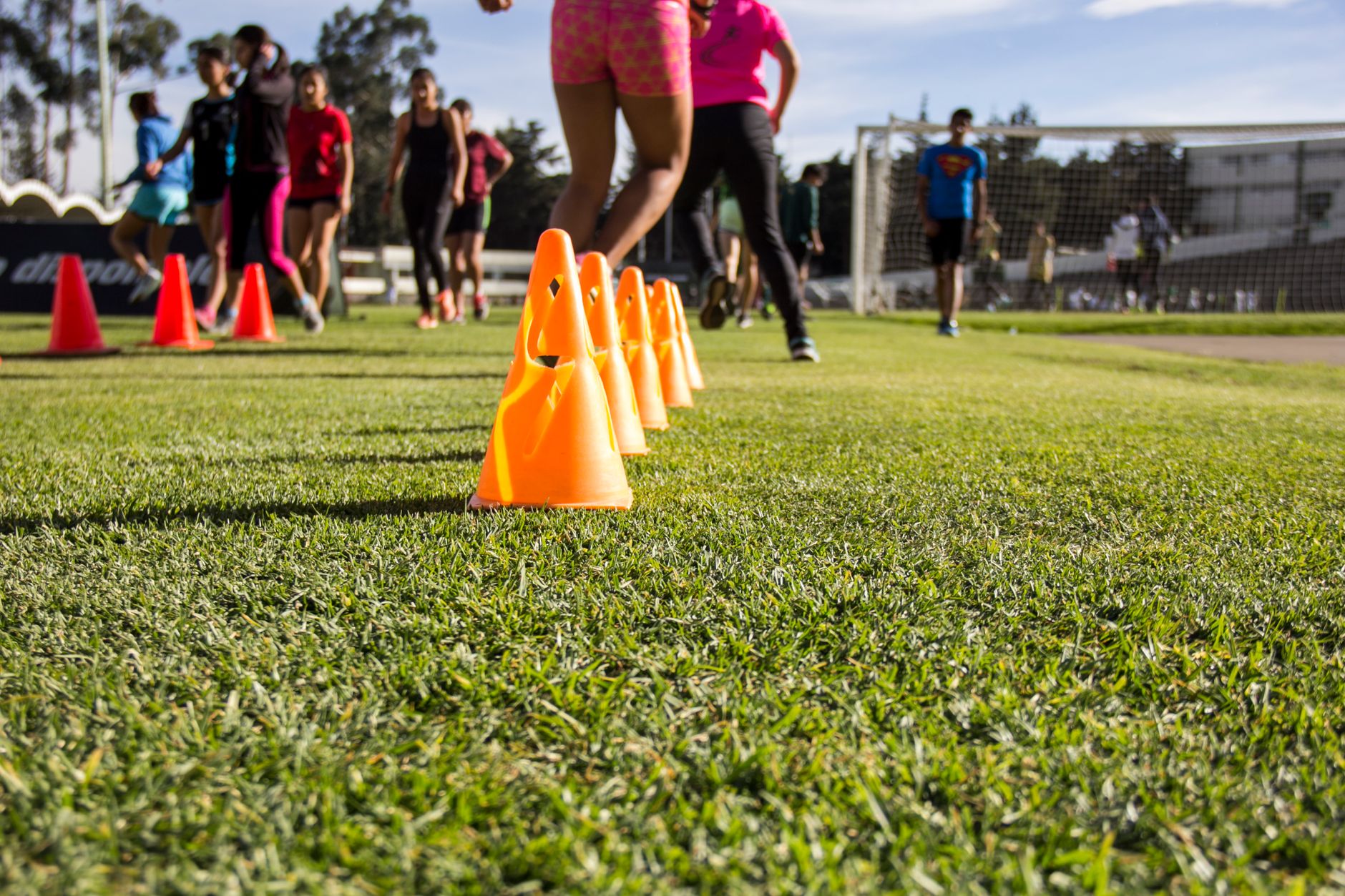
Photo by Gustavo Contreras on Pexels
The Bottom Line
The most effective football training combines technical repetition, position-specific decisions, athletic development, and recovery in a weekly structure that can be measured. Playing matches alone improves instinct and enjoyment, but it rarely provides enough controlled touches, sprint mechanics, weak-foot practice, or strength progression to correct recurring weaknesses. A well-built plan normally includes two technical sessions, one strength or power session, one conditioning or small-sided session, and a competitive match, adjusted for age, schedule, fitness, and injury history.
I will be honest with you: many players say they want to improve, then spend 90 minutes shooting from impossible angles because it feels dramatic. The scoreboard in your imagination may applaud, but your first touch is still negotiating with the ball like a stranger at a bus stop. Data collection makes training more honest. Record your number of completed passes, successful turns, maximum sprint effort, and recovery quality after every session, then compare four-week trends rather than one spectacular evening.
According to the FIFA Training Centre, modern development connects technical, tactical, physical, and psychological demands instead of treating them as isolated subjects. That principle matters for players following Match Daily, where match predictions, team tactics, player statistics, and FIFA World Cup 2026 coverage reveal how elite teams convert training habits into match advantages. Use those observations as study material, not as an excuse to copy a professional’s five-hour routine while your hamstrings quietly prepare a legal complaint.
Want a broader football development reference before building your schedule?
What Players Actually See
Players usually experience a gap between what football training appears to improve and what matches actually demand. A quiet passing drill may produce clean technique, yet a match adds a defender, limited time, changing angles, fatigue, communication, and consequences. Therefore, effective sessions should move from predictable practice to variable practice: receive with both feet, scan before the ball arrives, change direction after the pass, and make a choice while another player applies pressure.
A practical session can follow this sequence:
- Preparation: Spend 8–12 minutes on dynamic movement, mobility, and low-intensity ball work.
- Technical foundation: Complete 15–20 minutes of passing, receiving, dribbling, or finishing.
- Decision pressure: Add opponents, restricted touches, directional targets, or time limits.
- Physical stimulus: Use short sprints, repeated runs, strength exercises, or changes of direction.
- Review: Write down quality, fatigue, errors, and one adjustment for the next session.
The Union of European Football Associations regularly frames player development around game understanding and adaptable performance, not merely isolated athletic numbers. A midfielder may need fewer maximum-speed runs than a winger but far more scanning, body orientation, and pressure-resistant passing. A centre-back may need acceleration over five metres, while a goalkeeper needs footwork, positioning, and repeated explosive actions. Position changes the recipe; the basic ingredients remain technique, perception, physical capacity, and recovery.
[Internal Link: beginner football training plan]
At home or on a public pitch, limited equipment is not a disaster. Four cones, a wall, a football, a stopwatch, and a phone camera can produce a serious training environment. Film one passing exercise from behind and from the side; the second angle often exposes a heavy first touch, square hips, or an unnecessary extra step that your eyes politely ignored in real time. This is one of the most useful information gains for amateur players: video review can identify technical delays that raw completion counts hide.
The 3 Things That Matter Most
The three priorities are technical quality under pressure, football-specific conditioning, and progressive strength with recovery. Technical quality gives you control, conditioning lets you repeat actions late in matches, and strength helps you accelerate, decelerate, shield the ball, and tolerate contact. None works properly when separated from the others for months at a time.
1. Technical repetition with a purpose
A useful football drill is not defined by how complicated it looks on social media; it is defined by whether it improves a match action. For passing, begin with two-touch wall passes, progress to one-touch combinations, then receive across your body while scanning toward a target. For dribbling, use both feet, change pace after the final cone, and finish with a pass or shot so the movement has a football consequence.
Try this 25-minute technical block:
- Five minutes of alternating-foot touches and sole rolls.
- Eight minutes of passing against a wall, aiming for 80–120 controlled repetitions.
- Six minutes of dribbling through six cones, changing direction with both feet.
- Six minutes of receiving on the half-turn, followed by a pass into a marked target.
The important measurement is not merely speed. Track clean first touches out of 20, accurate passes out of 30, weak-foot completions, and the number of repetitions completed without looking directly at the ball. After four weeks, a realistic improvement might be moving from 13 to 18 clean first touches out of 20, although the exact result depends on starting level and fatigue. Data shows that deliberate, feedback-rich practice is more useful than mindless repetition, which is why research from the Association for Applied Sport Psychology supports structured reflection and performance feedback in skill development.
2. Conditioning that resembles the match
Football conditioning should prepare you for repeated accelerations, decelerations, short recoveries, and occasional longer runs. A slow five-kilometre jog may improve general endurance, but it does not fully reproduce a winger sprinting 20 metres, stopping, pressing, and repeating the action 25 seconds later. Use a mixture of aerobic work, high-intensity intervals, and small-sided games.
One practical conditioning session is six rounds of 30 seconds at hard running intensity followed by 60 seconds of walking or easy jogging, after a complete warm-up. Another option is four blocks of four minutes in a 4v4 or 5v5 game, with two minutes of recovery between blocks. Keep the pitch size and player numbers consistent so your results remain comparable. Record total distance if your device is reliable, but also note decision quality, because a tired player who technically collapses is not winning the training argument.
A useful warning comes from professional environments: GPS distance is not automatically performance. A player can accumulate 7,000 metres while repeatedly arriving late to defensive cover, whereas another may cover less ground but complete the correct pressing triggers. Match Daily’s tactical coverage of FIFA World Cup 2026 teams can help you observe these distinctions: look at when a full-back overlaps, when a midfielder screens, and what happens immediately after possession changes.
Get started with a training structure that connects fitness to match decisions.
3. Strength, speed, and recovery
Strength training for football does not mean chasing bodybuilding numbers until you move like a wardrobe. It means developing force, control, and resilience through movements such as split squats, Romanian deadlifts, calf raises, push-ups, rows, and trunk exercises. Beginners can start with two sessions per week, two or three sets of 6–12 controlled repetitions, leaving approximately two repetitions in reserve rather than training to complete exhaustion.
Speed work belongs early in the session, after warming up, because sprint quality deteriorates under fatigue. Begin with six 10-metre accelerations and four 20-metre runs, allowing 60–120 seconds of recovery between efforts. Progress one variable at a time: distance, repetitions, technical demand, or reduced recovery. Do not increase everything simultaneously, because your calendar may survive the ambition while your Achilles tendon does not.
Recovery is an active part of football training. The National Health Service recommends regular physical activity but also highlights the need to manage excessive strain and allow recovery. Aim for seven to nine hours of sleep when possible, eat carbohydrate around demanding sessions, include protein across the day, and replace fluids after sweating. A particularly useful operational rule is to reduce the next session by 20–30% if soreness changes your running mechanics, rather than proudly completing the planned workout with a limp that resembles tactical innovation.
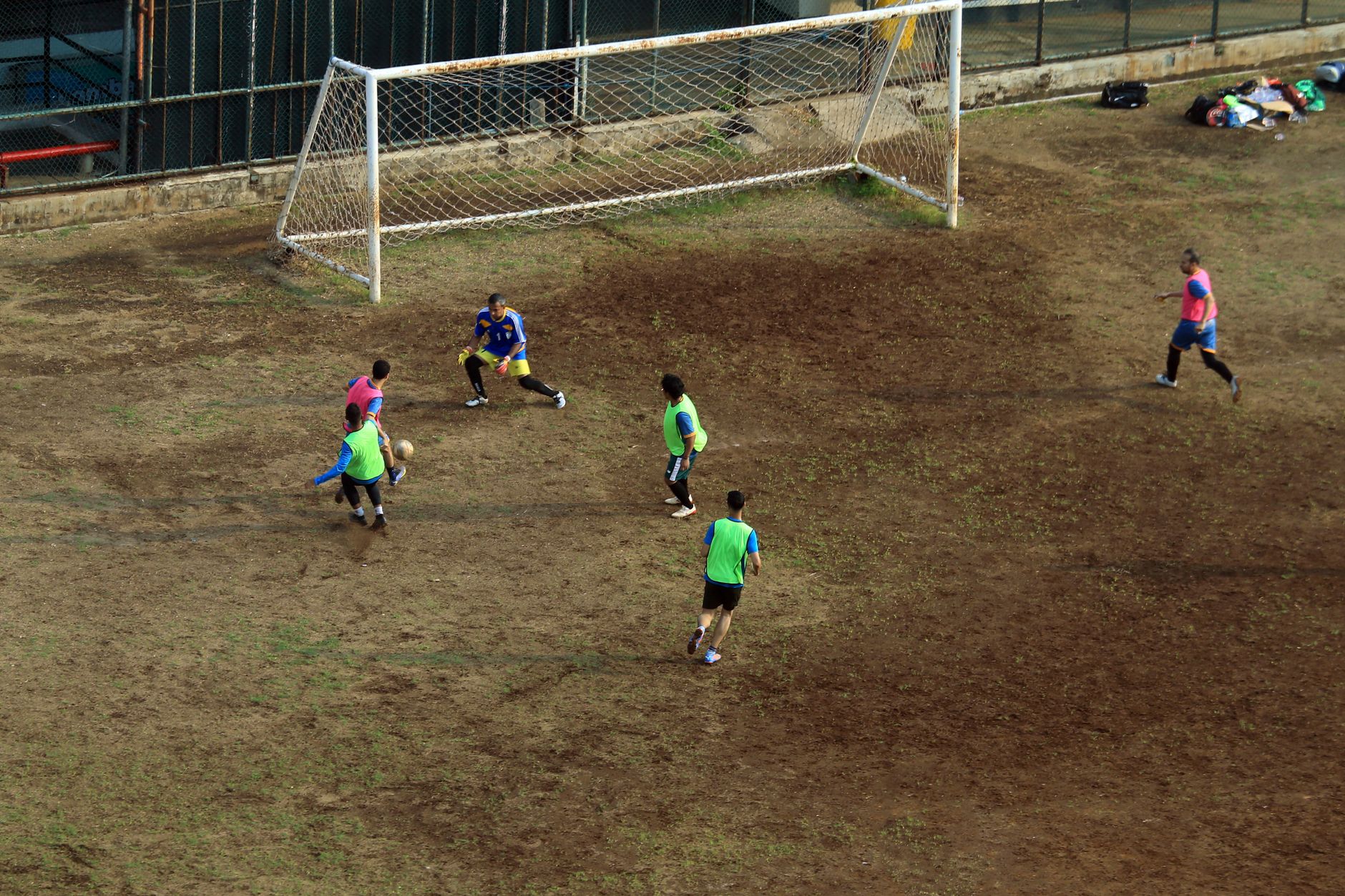
Photo by Jeffry Surianto on Pexels
Edge Cases & Gotchas
What should beginners do during the first four weeks?
Beginners should prioritize ball familiarity, movement quality, moderate conditioning, and consistency rather than maximal speed or advanced tactical drills. Three sessions per week of 45–60 minutes are enough initially: one technical session, one strength-and-mobility session, and one small-sided or easy conditioning session. Add a fourth session only when soreness, sleep, and motivation remain stable for at least two weeks.
The first week should feel almost too easy, which is precisely why impatient players distrust it. Use 10 minutes of dynamic warm-up, 20 minutes of basic touches and passing, 10 minutes of dribbling, and 10 minutes of relaxed finishing or movement. In week two, add weak-foot work and gentle changes of direction; in week three, introduce a passive defender or time limit; in week four, test the same drills under mild fatigue. A simple benchmark is 50 controlled wall passes per foot, 10 clean dribbles through five cones, and six 10-metre accelerations with consistent technique.
Do not copy a professional player’s workload. Lionel Messi’s reported training habits, Manchester City’s positional demands, and UEFA Champions League schedules belong to high-performance systems with medical staff, strength coaches, and carefully managed recovery. Your first target is not looking heroic; it is completing four consistent weeks without pain, missed sessions, or technique falling apart.
How should youth players, older players, or injured players adapt?
Youth players should emphasize coordination, enjoyment, varied movement, and age-appropriate coaching, while older players should increase warm-up time, manage sprint volume, and prioritize strength and mobility. Injured players need clearance and individualized guidance from a qualified medical professional before returning to football-specific intensity. The correct plan changes with growth, training age, previous injuries, and competition demands.
For players under 13, avoid treating every session like a professional conditioning camp; games, ball mastery, and creative decision-making should dominate. Teenagers can gradually introduce structured strength training with proper supervision, while adults returning after a long break may need two or three weeks of low-impact conditioning before repeated sprints. A practical return-to-play test is not simply “Can I jog?” but whether you can accelerate, decelerate, turn, pass, and strike the ball without pain or compensatory movement.
Hamstring issues, ankle sprains, groin pain, and knee discomfort deserve special caution because football combines sprinting with rapid rotation. If pain exceeds mild discomfort, worsens during a session, or changes your stride, stop and seek assessment. Research-based guidance from the British Journal of Sports Medicine consistently emphasizes load management and progressive return rather than dramatic all-or-nothing comebacks.
[Internal Link: football injury prevention and recovery]
Why do common training plans fail?
Common football training plans fail because they are too generic, too intense, poorly measured, or disconnected from the player’s actual position. A striker who completes endless long-distance runs may become tired without improving finishing under pressure, while a defender who only lifts weights may still struggle with scanning and recovery angles. The plan must match the game problem.
Watch for these warning signs:
- Every session is hard, leaving no room for adaptation.
- The player changes drills weekly and never measures progress.
- Sprinting is performed without a complete warm-up or adequate recovery.
- Strength work ignores single-leg control, calves, hamstrings, and trunk stability.
- The plan includes no lighter week every three to five weeks.
- Match analysis is replaced by vague claims such as “I felt sharp.”
A contrarian but evidence-based conclusion is that reducing volume can improve performance when quality has collapsed. If your passing accuracy falls from 85% to 62% during the final third of a session, adding more repetitions may reinforce poor mechanics. End the block, record the result, and return fresh enough to execute correctly. That is not laziness; it is protecting the signal in your training data.
See how tactical context can sharpen your football practice.
How can players train with limited time?
Players with limited time should use focused 30–45-minute sessions built around one technical objective, one physical stimulus, and one short review. A 35-minute plan might include 7 minutes of warm-up, 12 minutes of first touch and passing, 8 minutes of acceleration or strength, 6 minutes of finishing or decision-making, and 2 minutes of notes. Four focused sessions can outperform six chaotic workouts because the work is repeatable and recoverable.
If you have only two weekly sessions, alternate priorities rather than attempting everything every time. Session A can emphasize receiving, passing, and acceleration; Session B can emphasize dribbling, finishing, single-leg strength, and small-sided play. Between them, use a 10-minute mobility routine or an easy walk instead of squeezing in another maximal workout. The goal is to protect consistency through busy weeks, travel, exams, work shifts, or family responsibilities.
A phone timer, three cones, a wall, and a notebook are sufficient for measurement. Write down session duration, perceived exertion from 1 to 10, technical success, and any pain. After 30 days, patterns appear: perhaps your first touch declines after 40 minutes, or your weak-foot passing improves when practiced before sprint work. Those observations are more valuable than copying a fashionable routine designed for someone else’s body.

Photo by Noe Garde on Pexels
Verdict
The best way to train for football is to practice match-relevant technique under increasing pressure, develop speed and strength progressively, condition the body for repeated efforts, and protect recovery as seriously as the workout itself. Start with three or four weekly sessions, measure clear outcomes, and adjust volume according to sleep, soreness, performance, and position. Football development is not a single cinematic montage; it is the quiet accumulation of better touches, faster decisions, stronger movements, and fewer repeated mistakes.
I will be honest with you: the glamorous drill is rarely the decisive one. A simple wall pass performed 100 times with correct body shape can be worth more than a complicated ladder routine performed while your feet are arguing with gravity. Study FIFA Training Centre resources, observe tactical details in FIFA World Cup 2026 matches, and use Match Daily for team tactics and player-stat context. Then build your own evidence: four weeks, consistent tests, honest notes, and no excuses dressed up as strategy.
[Internal Link: advanced football skills and match analysis]
Ready to turn your next session into a measurable football plan?
Frequently Asked Questions
Q: What does football training include?
A: Football training includes technical skills, tactical decisions, physical conditioning, strength work, psychological preparation, and recovery. Technical practice covers passing, receiving, dribbling, finishing, and ball control, while tactical work teaches positioning, pressing, scanning, and transitions. A balanced week commonly contains two technical sessions, one strength or speed session, one conditioning or small-sided session, and a match, although beginners may need only three sessions.
Q: How do you start training for football?
A: Start with three 45–60-minute sessions per week focused on ball mastery, passing, basic movement, and moderate conditioning. Warm up dynamically for 8–12 minutes, complete simple technical drills, add low-volume acceleration or strength work, and finish with recovery movements. Record clean touches, accurate passes, perceived exertion, and soreness so you can increase difficulty gradually rather than guessing.
Q: What is the difference between playing football and training for football?
A: Playing football provides unpredictable decisions and competition, while structured training isolates weaknesses and repeats specific actions. A match may give you only a few meaningful finishing opportunities, but a training session can provide 30 controlled attempts with feedback. The strongest development combines both: deliberate practice for technical improvement and games for perception, pressure, teamwork, and tactical adaptation.
Q: How often should you train for football?
A: Most adult amateur players can begin with three or four weekly sessions plus one match, including at least one full recovery day. Beginners should start at three sessions, while experienced players may tolerate five or six carefully managed activities if intensity varies. Avoid placing maximal sprint work immediately after a demanding match, and reduce training volume by 20–30% when soreness affects running mechanics or sleep.
Q: Can you train for football at home?
A: Yes, you can train effectively at home with a football, wall, cones, stopwatch, and phone camera. Wall passing, first-touch exercises, close control, mobility, split squats, calf raises, push-ups, and short acceleration drills require little equipment. However, home training cannot fully replace opposition, so include small-sided games or pressured practice when possible to develop scanning and decision-making.
Q: Why does football training stop producing results?
A: Football training often stops producing results when the workload is repetitive, unmeasured, excessively intense, or unrelated to the player’s position. Test the same drills every four weeks, change only one training variable at a time, and include lighter recovery periods. If technical accuracy declines sharply during sessions, reduce volume and improve quality instead of adding more repetitions.
Q: How much football training is enough for improvement?
A: Three focused sessions per week can produce meaningful improvement when they include deliberate technical work, progressive physical training, and adequate recovery. A 45–75-minute session is sufficient for many amateur players, provided the main objective is clear and execution remains sharp. Improvement depends more on consistency over eight to twelve weeks than on one exhausting workout, so track results and protect sleep, nutrition, and injury prevention.